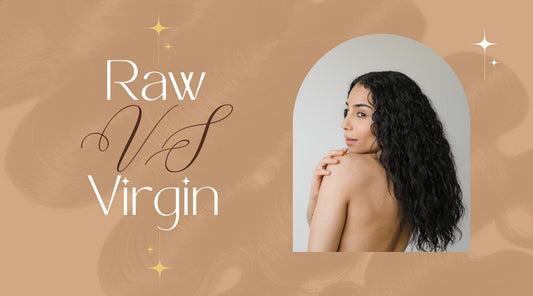


Raw vs. Virgin Hair: Which One Is Best for Me?
If you've been shopping for hair extensions or Natural Wigs, you've likely encountered the terms "raw hair" and "virgin hair."
While both are popular options in the hair industry, they have distinct differences that can impact your overall experience with them.
Understanding these differences is essential if you want to make a truly informed decision about which type of hair will best meet your needs, match your lifestyle, and fit your budget.
This guide breaks down everything you need to know about raw and virgin hair to help you choose the right option.

What Is Virgin Hair?
Virgin hair refers to human hair that has never been chemically processed.
This means it hasn't been colored, permed, relaxed, or treated with harsh chemicals.
However, virgin hair may have undergone minimal processing, such as steam processing or acid washing, to prepare it for sale.
Key Characteristics of Virgin Hair
Virgin hair typically comes from a single donor; it's very rare that some manufacturers collect hair from multiple donors with similar textures and colors.
That's why the cuticles of virgin hair remain intact and run in the same direction, which helps prevent tangling and matting.
As briefly mentioned before, virgin hair may undergo some preparation processes before reaching the market despite being free from chemical treatments.
These processes might include:
- Steam processing to create different curl patterns
- Gentle washing to remove dirt and debris
- Light conditioning treatments to enhance softness, like in our Brazilian Straight Bundles
- Mild acid washes to add shine
Benefits of Virgin Hair
Virgin hair is a popular choice because it offers a good balance of quality and affordability.
One of its biggest benefits is versatility. You can color, perm, or style it just like your natural hair.
Since it comes from a single donor, it tends to have a more consistent texture and color, too, which gives it a natural look when worn.
With the right care, virgin hair can last anywhere from 6 to 12 months, and it's more budget-friendly than raw hair while still providing great results.

What Is Raw Hair?
As the name implies, Raw Hair represents the purest form of human hair available on the market.
It's collected directly from a donor and remains completely unprocessed, with no steam treatments, no acid baths, no silicone coatings, and no chemical alterations whatsoever.
Key Characteristics of Raw Hair
True raw hair maintains its natural state from collection to packaging.
Here's what makes raw hair unique:
- Collected from a single donor
- Cuticles remain intact and aligned in the same direction.
- Complete absence of chemical processing
- Natural color variations and textures are preserved
- No artificial coatings or treatments
Benefits of Raw Hair
Raw hair is a great choice if you're looking for top-quality hair that lasts and looks natural.
It can last a whopping 2 to 3 years or even longer with proper care, and it's also very versatile and hardy.
Because it hasn't been processed, raw hair extensions, like our Raw Exclusive Straight Bundles, move and feel just like real hair, plus it keeps its original texture, whether it's straight, wavy, curly, or kinky, so you get an authentic look every time.

Key Differences Between Raw and Virgin Hair
Now that we've described both raw and virgin hair and you know what each has to offer, let's explore the distinctions between the two so you can be in a position to choose the best type of hair for your specific needs.
Processing Methods
The main difference between these two types of hair lies in the processing.
Remember, raw hair is completely unprocessed and has not been altered in any way, while virgin hair may be steam-processed to create certain textures.
Texture and Feel
Texture-wise, raw hair tends to feel coarser and more natural in texture because it's got all its natural characteristics.
Virgin hair, on the other hand, may feel slightly softer or more uniform due to the minimal processing it undergoes.
Longevity
Raw hair typically outlasts virgin hair by a significant margin.
For virgin hair, you're looking at a lifespan of about 6-12 months with proper care, while raw hair can remain beautiful for 2-3 years or even longer.
Price Point
Raw hair commands a higher price point due to its purity and longevity.
Virgin hair offers a middle ground between synthetic options and raw hair, making it more budget-friendly while still providing good quality.

Which One Is Best for You?
Choosing between raw and virgin hair depends on several factors, including your budget, styling needs, and how much maintenance you're willing to do.
Consider Raw Hair If:
- You're looking for a long-term investment
- You want hair that can handle frequent styling changes, like our Raw Indian Wavy Bundle
- You prefer a completely natural texture and look
- You're willing to pay a premium for top quality
- You have experience caring for natural hair extensions
Essentially, raw hair is best for those who admire the natural state of the products, from Mink lashes to Raw hair. You make choices to achieve the most authentic look and feel, and are willing to pay more upfront for longevity and greatness.
Consider Virgin Hair If:
- You have a more moderate budget
- You want good quality without the highest price tag
- You replace your hair extensions or wigs semi-regularly
- You prefer hair that feels slightly softer out of the package
- You're looking for a balance between quality and affordability, like in our popular Brazilian Body Wave Bundles
Virgin hair represents an excellent middle ground for most consumers, as it offers good longevity and styling versatility without the premium price of raw hair.

Maintenance Tips for Both Types
No matter if you go with raw or virgin hair, taking good care of it is the key to keeping it looking great and lasting a long time.
For best results, always wash your hair with a gentle, sulfate-free shampoo and use deep conditioner regularly to keep it moisturized.
Never go to bed with wet Hair Extensions or wigs, and always use a heat protectant before styling with hot tools.
When you're not wearing your hair, store it properly, either on a wig stand or in a silk bag, to help it keep its shape.
Also, be gentle when brushing, using a wide-tooth comb or a brush made for extensions.
Raw hair might need a little more attention at first since it hasn't been pre-conditioned like some virgin hair, but with the right care, it can stay beautiful for an even longer time.
Find Your Perfect Match
Both raw and virgin hair can give you beautiful, natural-looking results; it just depends on what you're looking for.
If you want hair that closely mimics natural hair with minimal processing and long-lasting strength, raw hair is your best bet.
If you're after a polished look with more texture options and a slightly lower price, virgin hair may be the perfect choice.
Whichever you choose, the most important thing is to take care of your hair properly and purchase it from a trusted brand.